
A good preventative maintenance schedule template is more than just a document; it's the blueprint for getting out of the costly "break-fix" cycle and moving toward a smarter, proactive maintenance strategy. It’s how you get organized, set clear frequencies for tasks, and keep a close eye on your assets, turning chaotic emergency repairs into predictable, planned work.
Move From Reactive Chaos To Proactive Control

Every facility manager knows that sinking feeling when a critical HVAC unit dies during a record-breaking heatwave. It kicks off a frantic scramble of unexpected downtime, urgent calls to vendors, and repair bills that blow your budget to pieces. That’s the reality of reactive maintenance—a constant state of putting out fires.
A preventative maintenance schedule isn't just another spreadsheet. Think of it as your command center for taking back control. It gives you a solid framework to systematically service equipment before it fails, turning potential disasters into routine, manageable tasks.
The True Cost of a Reactive Approach
When you’re operating without a plan, you're always one component failure away from operational paralysis. This reactive model doesn't just cost you in emergency repair fees; it kicks off a ripple effect of hidden expenses that drain your resources and can even create unsafe conditions.
Just think about the fallout:
- Unplanned Downtime: When a key asset like a boiler or elevator goes down, the entire operation can grind to a halt.
- Budget Overruns: Emergency labor rates and expedited shipping for parts cost a fortune compared to planned work.
- Reduced Asset Lifespan: Equipment that's run to failure suffers far more wear and tear, forcing you into premature replacements.
- Safety Hazards: Neglected machinery can create serious risks, from slip/trip prevention failures and poor air quality to electrical faults.
The Power of Proactive Planning
Shifting to a proactive strategy fundamentally changes how you run your facility. The numbers don't lie about the financial and operational wins. We’ve seen historical data showing that facilities without structured PM plans suffer equipment failures up to 3 times more frequently than those that use them.
More recently, a 2023 study found that organizations using PM templates cut their maintenance costs by a whopping 12-18% annually.
By scheduling routine inspections and servicing, you catch the small issues—a frayed belt, a dirty filter, a minor leak—before they snowball into catastrophic failures. This simple shift from 'break-fix' to 'plan and prevent' is what separates a struggling facility from a high-performing one. You can explore a deeper comparison of preventive maintenance vs. reactive maintenance in our detailed guide.
How To Build Your Master PM Template

So, you're ready to build a preventative maintenance system that actually prevents problems? Great. But before you start listing tasks, the first real step is to take a complete inventory of your assets. This isn't just a list; it's the foundation of your entire program. If it's not on the list, it doesn't get maintained.
Grab a clipboard or a tablet and walk your facility. Catalog everything that needs regular attention to keep running safely and efficiently. Don't just hit the big stuff like the boilers and HVAC units. Think about the equipment that's critical for safety, compliance, or just keeping the doors open—the things that often get missed in a quick audit.
Your asset inventory should cover everything from the roof to the basement:
- Major Mechanical Systems: HVAC units, air handlers, boilers, and water heaters.
- Safety & Compliance Gear: Fire extinguishers, emergency lighting, and alarm systems.
- Specialized Operational Equipment: For a gym, that means treadmills and weight machines. For a dorm, it might be the commercial laundry equipment.
- Janitorial & Cleaning Equipment: Floor scrubbers, vacuums, and high-pressure washers.
From Inventory To Actionable Schedule
Once you have a complete asset list, it's time to turn it into a real, working schedule. This is where you populate your template with the details that guide your maintenance team. A simple list becomes a powerful tool when you add specific, actionable information for every single item.
Here are the essential columns that every good preventative maintenance schedule template needs:
- Asset ID: A unique code for each piece of equipment (e.g., HVAC-01, TREADMILL-03).
- Asset Name & Description: Plain language for what it is (e.g., Rooftop HVAC Unit, Precor Treadmill).
- Location: Exactly where to find it (e.g., Roof, 2nd Floor West Wing).
- Task Description: The specific action needed (e.g., "Change filter," "Lubricate belt," "Inspect pressure gauge," "Clean and descale").
- Frequency: How often the task happens (e.g., Daily, Monthly, Quarterly, Annually).
- Assigned To: The technician or team who owns the task.
- Parts/Tools Needed: A list of what to bring to the job.
The trickiest part is often figuring out the right maintenance frequency. Your starting point should always be the manufacturer's recommendations—that's your baseline. From there, you can fine-tune the schedule based on your own data, like how heavily the equipment is used, its age, and the environment it operates in.
Download Our Free PM Schedule Templates
To help you get going right away, we've put together some pre-built templates with practical examples. They’re designed to be easily customized for any kind of facility, from a commercial office building to a university gym.
- Download in Excel
- Get the Google Sheets Version
Below is a quick look at our Google Sheets template. It shows how you can structure entries for different assets, from janitorial gear to specialized fitness machines, giving your team everything they need at a glance.
Notice the level of detail—unique IDs, clear locations, and specific tasks leave no room for guesswork. To make sure you're not missing anything, it's a good idea to cross-reference your task descriptions with general SOPs for equipment maintenance. That's how a simple checklist evolves into a rock-solid operational system.
Adapting Your Template For Any Facility

A good preventative maintenance template is your foundation, but its real power is unlocked when you customize it. Let's be honest, a one-size-fits-all approach is doomed to fail. The operational demands of a corporate office are a world away from a busy university rec center, and your maintenance plan has to reflect that reality.
The trick is to look past the generic tasks and really dig into what keeps your facility safe, functional, and pleasant for the people who use it every day. The same core template can be molded to serve wildly different needs once you dial in the right tasks, frequencies, and priorities.
University Recreation and Fitness Centers
Think about a college gym or a commercial fitness center—these are high-traffic, high-impact environments. Equipment uptime isn't just a "nice-to-have"; it directly impacts member satisfaction and, more importantly, safety. Your schedule here needs to be laser-focused on both the user-facing machines and the back-of-house systems that keep the place clean and running smoothly.
For these types of facilities, you'll want to adapt your PM schedule to zero in on:
- Cardio Equipment: Treadmills, ellipticals, and bikes need weekly attention. This means belt lubrication, tension checks, and running diagnostics on the electronics.
- Strength Machines: Get in there monthly to inspect all cables, pulleys, and upholstery. A snapped cable is a massive safety liability that a simple, routine check can prevent.
- Locker Rooms & Hygiene: Daily sanitation of high-touch surfaces is a given. You'll also want to schedule quarterly deep cleans for tile and grout to fight moisture and mildew, paying close attention to infection control basics.
- Specialized Areas: A university rec center might need its basketball court refinished quarterly or its pool filters serviced with new sand every six months. In a dorm, this extends to dormitory hygiene and common area sanitation.
This isn't just theory. We've seen real results from this kind of detailed planning. In some collegiate facilities, custom PM templates led to a 62% reduction in hygiene-related incidents. When similar templates were used for vendor management in large venues, they saw 88% on-time completion for critical tasks. You can dig deeper into how leading facilities use preventative maintenance templates to get these kinds of wins.
Office Buildings and Corporate Campuses
Now, shift gears to a corporate setting. The focus moves from specialized gym equipment to the core systems that keep employees comfortable, productive, and safe. Here, preventative care is a business continuity issue—an HVAC failure or a major power outage can grind hundreds of people to a halt.
An office-focused template needs to prioritize things like:
- HVAC Systems: Be strict with quarterly filter changes and semi-annual inspections of rooftop units. This maintains air quality and helps you avoid catastrophic failures during a heatwave.
- Lighting and Electrical: A monthly walkthrough to replace burned-out bulbs in common areas is simple but important. More critically, annual thermal scanning of electrical panels can spot fire hazards before they become disasters.
- Life Safety Systems: This is non-negotiable. Monthly checks on fire extinguishers and emergency exit lighting are critical for compliance and safety. This also includes maintaining clear workplace safety signage.
- Janitorial & Restroom Sanitation: Schedule daily, weekly, and monthly tasks for cleaning frequencies, disinfection protocols, and deep cleaning to ensure public health and hygiene.
By tailoring the tasks in your preventative maintenance schedule template, you turn a generic checklist into a powerful operational tool. It becomes a plan that solves the real-world problems your facility faces, making sure you put your time and money where it counts the most.
Sample PM Frequencies By Facility Type
To see how this plays out in the real world, here’s a look at how PM frequencies can differ for the same type of asset across various facilities. Notice how usage and environment dictate the schedule.
| Asset/Area | Office Building | Fitness Center | University Dorm |
|---|---|---|---|
| HVAC Air Filters | Quarterly | Monthly (due to higher traffic/airborne particles) | Bi-annually (during student move-in/out periods) |
| Restroom Deep Clean | Monthly deep clean | Weekly deep clean (heavy use & hygiene focus) | Quarterly (during student breaks) |
| Plumbing Fixtures | Semi-annual inspection | Quarterly inspection (high usage in showers/restrooms) | Annually (full inspection of all units) |
| Fire Safety Systems | Monthly checks, annual certification (standard compliance) | Monthly checks, annual certification (standard compliance) | Monthly checks, plus pre-break inspections (before holidays) |
| Exterior Windows | Annually | Semi-annually (maintaining curb appeal is key) | As-needed or annually |
As you can see, context is everything. A fitness center's restroom sanitation requires a much more aggressive schedule than one in a standard office. This table underscores why you can't just download a template and run with it—you have to think critically about your specific operational needs.
Turning Your Plan Into Action
A killer preventative maintenance schedule is just a piece of paper (or a spreadsheet) until your team actually uses it. The entire success of your PM program boils down to how well you roll it out, and that starts with getting your technicians on board from the very beginning. You have to sell them on how this makes their lives easier.
Forget talking about asset lifespan or budget goals. Frame the new schedule as a tool to kill chaos. Focus on the benefits they'll feel in their day-to-day work—like no more frantic weekend emergency calls or the frustration of scrambling for parts during an unexpected breakdown.
From Spreadsheet To Standard Practice
Once your team sees the "what's in it for me," it's time for some clear, hands-on training. Don't just blast out an email with the new spreadsheet and cross your fingers. You need to walk them through it. Show them exactly how to find their assigned tasks, how to log their work, and where to leave feedback.
A smooth rollout really comes down to a few practical steps:
- Hold an initial training session: Get everyone in a room (or on a call) to go over the template and ask questions. Use janitorial training guides or equipment-specific SOPs.
- Create simple documentation: A one-page cheat sheet explaining how to access and update the schedule is perfect.
- Establish a feedback loop: Make it easy for techs to report problems, suggest changes, or just note that a task took way longer than planned. Their insights from the field are gold for fine-tuning the schedule.
Team adoption is the make-or-break moment. If the new process feels clunky, confusing, or like you're just micromanaging them, it’s doomed. The best way to get buy-in is to make it a team effort. Bring your most experienced technicians into the final review before you go live.
Graduating to a CMMS
As your operation gets bigger, that trusty spreadsheet will start to feel like a ball and chain. You'll know it's time to look at a Computerized Maintenance Management System (CMMS) when you're spending more time managing the schedule than your team spends doing the actual work.
Making this jump automates a ton of the manual grind. For a deeper dive on this, our guide on work order management best practices is a great next read.
Think of a CMMS as the next evolution of your PM template. It transforms your static plan into a living, breathing system. To really nail the implementation of your PM schedule and claw back valuable time, you might even look into specialized field service scheduling software.
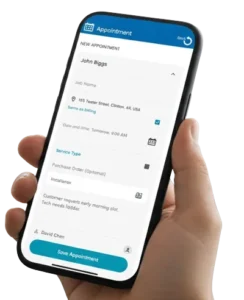
These systems do the heavy lifting for you—automatically kicking out work orders based on your frequencies, zapping reminders to technicians' phones, and even keeping tabs on parts inventory. But the real game-changer is the data. A CMMS gives you the hard numbers you need to make smarter decisions that ultimately make everyone's job easier and more effective.
How To Measure And Improve Your PM Program

A preventative maintenance schedule isn't a "set it and forget it" document. Your facility is a living, breathing thing—equipment gets older, production demands change, and new assets are brought online. If you want your PM program to stay effective, you have to treat your schedule as a dynamic tool that evolves with your operations. And that evolution needs to be guided by hard data, not just gut feelings.
It's about moving past the "check the box" mentality. The real goal is to create a cycle of continuous improvement. You measure performance, pinpoint what’s not working, and adjust your plan. By tracking the right numbers, you turn a static checklist into an intelligent system that gets smarter with every work order completed.
Key Performance Indicators That Matter
It's easy to get lost in a sea of data. The trick is to focus on a handful of key performance indicators (KPIs) that give you a clear, actionable picture of your program's health. These are the metrics that cut through the noise and tell you what’s really going on.
Start with these three essentials:
- Planned Maintenance Percentage (PMP): This is just the ratio of your planned maintenance hours to your unplanned, reactive hours. A high PMP—I always tell teams to aim for 80% or more—is a dead giveaway that your proactive strategy is paying off. It means you’re in control of your workflow, not the other way around.
- Mean Time Between Failures (MTBF): This one's simple: how long does a piece of equipment run before it breaks? If your MTBF is consistently going up, you know your PM tasks are genuinely extending equipment life.
- Preventive Maintenance Compliance (PMC): This metric tells you how many of your scheduled PMs are actually getting done on time. A low score here can signal a lot of things—not enough staff, an overloaded schedule, or just poor communication.
Creating a Data-Driven Feedback Loop
Once you have your KPIs, the next step is building a simple system to review them regularly. Don't wait a full year to find out your plan isn't working. A quarterly review is a great rhythm for spotting trends and making smart adjustments to your preventative maintenance schedule template.
In these reviews, you're hunting for patterns. Is a specific air handler failing every two months even though you're changing the filters monthly? That’s your cue to either bump up the frequency or add a more in-depth inspection to the work order.
Your technicians are your most valuable data source. They have their hands on the equipment every single day. Create an easy way for them to give feedback, whether it's a notes field in your CMMS or a quick debrief. Their on-the-ground insights can identify failing parts or inefficient steps that raw data might never show you.
The impact of a well-tuned program goes far beyond convenience. Poor maintenance practices are a factor in a staggering 40% of industrial accidents. On the flip side, facilities that actively manage and refine their PM programs can slash unplanned downtime by 50% and extend the life of their equipment by as much as 20%.
This data-first approach hits your bottom line, too. To see how a strong PM program lowers long-term expenses, check out our guide on what the total cost of ownership is for your assets.
Common Questions About Maintenance Schedules
Even with the best preventative maintenance schedule template in hand, you're going to have questions once the rubber meets the road. Let's dig into some of the most common things people ask when they start putting their plans into action.
Think of this as your quick-reference guide for those real-world moments that a template can't always predict. Getting these details right is what makes a maintenance plan actually work, rather than just look good on paper.
How Do I Decide The Right Maintenance Frequency?
Your starting point should always be the manufacturer's recommendations. Treat that as the absolute minimum. But from there, you need to adjust for the real world.
Think critically about the equipment's age, how hard you run it, and the environment it lives in. For instance, an air handler on a dusty factory floor is going to need its filters changed far more often than the exact same unit in a climate-controlled office. The same is true for cleaning frequency schedules in high-traffic areas versus low-traffic zones.
The most important thing? Pay attention to your data. If a specific piece of equipment keeps breaking down between its scheduled PMs, that’s not bad luck—it's a clear signal you need to shorten the interval.
When Should I Switch From A Template To A CMMS?
Spreadsheet templates are a fantastic way to get started, especially if you're managing a smaller facility or just dipping your toes into preventative maintenance. They help you build the right habits without a big upfront cost.
You'll know it's time to upgrade to a CMMS (Computerized Maintenance Management System) when you find yourself spending more time wrestling with the spreadsheet than your team spends doing the actual work.
A CMMS is the natural next step when you need to grow. It automates scheduling, sends work orders to your team's phones, keeps an eye on spare parts, and builds performance reports for you. It transforms your static plan into a living, breathing system.
How Can I Get My Team To Actually Use The Schedule?
Getting your team on board comes down to two things: involvement and communication. Your technicians have invaluable hands-on knowledge, so bring them into the planning process right from the beginning. Ask them what they think about task timings and how often things really need to be checked.
When you present the new schedule, frame it as a tool to make their lives easier. Be specific. This means fewer weekend emergency calls and a more predictable, safer workday. And finally, make it simple. Provide clear training and make sure the schedule is incredibly easy to get to, whether it's on a shared drive or a clipboard on the shop wall.
What Are The First Assets I Should Add To My Schedule?
Don't try to boil the ocean. If you try to add everything at once, you'll get overwhelmed. The key is to prioritize based on impact and risk. Start with the assets that are:
- Business-Critical: What piece of equipment would grind your entire operation to a halt if it went down? Think main production lines or the central HVAC system.
- High Safety Risk: Which assets are absolutely essential for keeping people safe and staying compliant? Fire suppression systems, emergency lighting, and assets in germ hotspots are perfect examples.
- Most Expensive: What would cost you an arm and a leg to repair or replace?
Nailing these high-value assets first will give you the biggest, most visible wins right away. That early success helps build momentum and makes it much easier to get buy-in for the rest of the program.
Leave a Reply